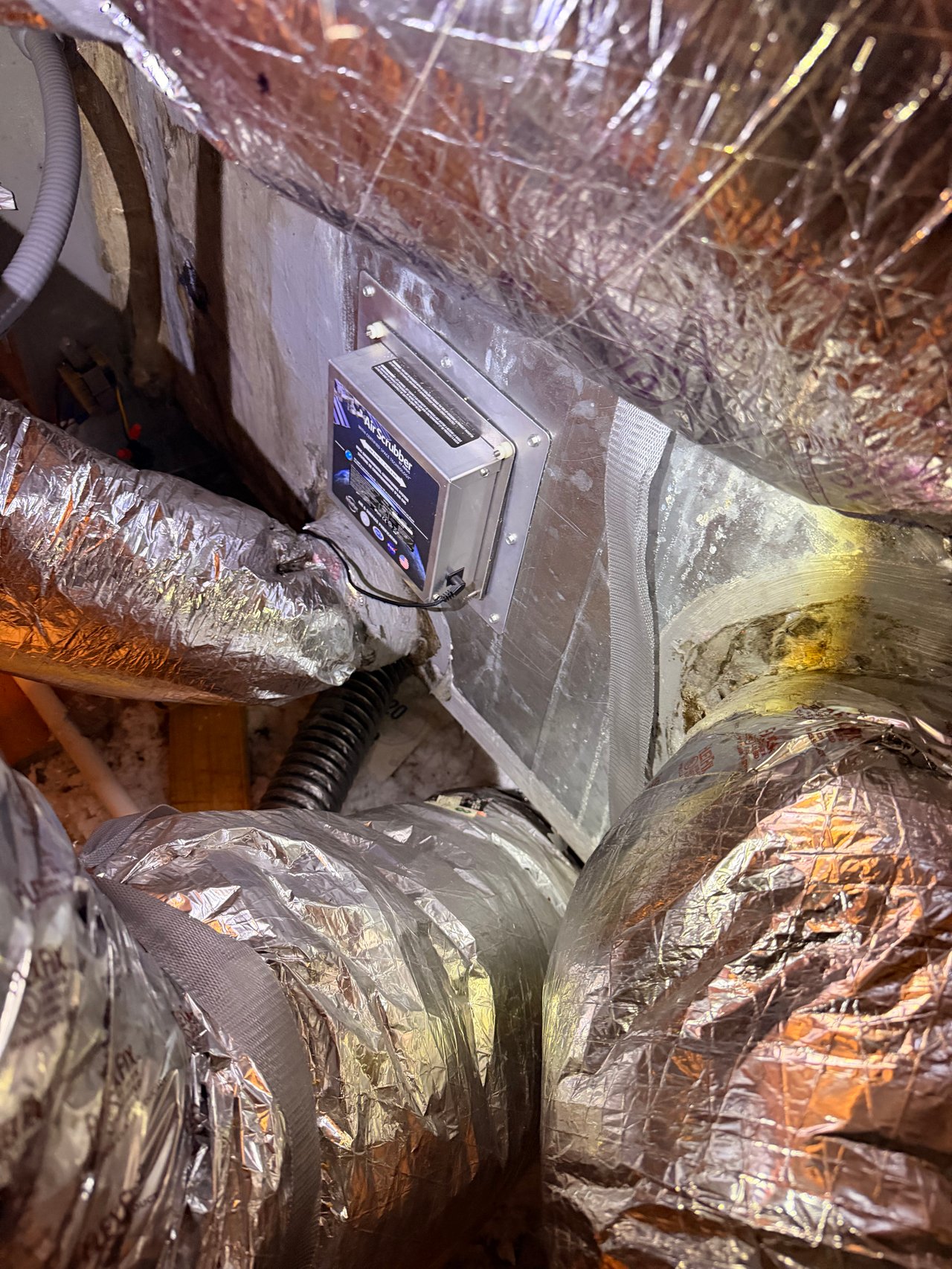
Most of us never look at the HVAC unit in the attic. Mine sat up there doing its job for years and I didn't think about it either, until I went up for something unrelated and noticed the outside of the plenum was wet.
Not dripping. Just sweating. Beads of water sitting on metal that had no business being wet.
I'm not an HVAC tech. Twenty-plus years on the homebuilder supply side taught me something more useful than that, though: when a material is wet and it shouldn't be, you don't start by replacing the wet thing. You start by figuring out why it got wet.
What sweating actually means
Condensation on the outside of a plenum or duct means warm, humid air is reaching a surface cold enough for water to form on it. That's it. That's the whole mechanism.
In a Houston-area attic in July, warm and humid is the default. So the question isn't whether there's humid air up there. It's why it's making contact with cold metal instead of being kept off it.
A few things can cause that. Insulation that's damaged, missing, or was never adequate to begin with. Air leaking around duct or plenum connections. Attic humidity running high. Problems in the ductwork itself. Often it's some combination, which is what makes it easy to misdiagnose.
Why replacing the wet part can leave you right back where you started
If the plenum is sweating because of an air leak or a gap in insulation, a brand new plenum installed into those same conditions will sweat too. Maybe not this month. But it will.
That's the part I'd push on if it were your house. If there's visible dirt, staining, mildew, or something that looks like growth around the plenum and duct connections, I'd want the moisture source found before anybody calls the repair finished. Otherwise you've paid for parts and kept the problem.
What a good evaluation looks at
The tech who came out to mine went past the damaged material, which is what I'd want. Plenum. Duct connections. Insulation. Air sealing. Condensate drainage. The evaporator area. Anything else that could be putting moisture where it doesn't belong.
Attic conditions matter here too. Blocked soffit vents, poor ventilation paths, insulation that's been pushed around by somebody working up there — all of that can add heat and moisture.
I'd add one caution, because I've watched this shortcut get taken. Better attic ventilation can be a good idea on its own merits. That doesn't automatically prove poor ventilation is what made a plenum sweat. Those are two different conversations, and it's worth keeping them separate so you actually solve the thing you're paying to solve.
What I'd tell a homeowner
Find the moisture source. Correct it. Then repair or replace whatever got damaged. In that order.
And don't let anyone tell you water on the outside of your HVAC system is just normal because the equipment sits in a hot attic. It's not normal. It's information.
If you're in Imperial Oaks or around Spring and you're getting a house ready to sell, this is exactly the kind of issue that can show up during an inspection and become a problem at the worst possible time. Finding it early gives you time to have the right professional evaluate it before a buyer does.